

Since its founding in Paris in 1847 by Louis-François Cartier, Cartier has stood as a symbol of refinement: from cinched belts of the Belle Époque to the world’s most photographed wrists. Yet in the modern era, Cartier’s watches have become more than mechanical masterpieces; they are cultural touchstones, elevated, amplified and humanized by the celebrities who wear and embody them.
Icons Before Ambassadors
Cartier’s earliest milestones were marked less by paid celebrity ambassadors and more by organic celebrity moments. Throughout the 20th century, Hollywood stars, artists and cultural icons were photographed wearing Cartier watches, bringing the brand into the aspirational zeitgeist long before formal ambassador programs existed. Figures such as Audrey Hepburn, Clark Gable, Steve McQueen and Andy Warhol helped cement models like the Tank and Santos as objects of desire.
Warhol, in particular, famously stated that he did not wear his Tank to tell the time, but simply because he loved the way it looked, an offhand remark that would later become emblematic of Cartier’s fusion of design, art and personal expression.
One of the most evocative examples of this legacy remains Jacqueline Kennedy Onassis’s Cartier Tank watch, a timepiece that transcended aristocratic glamor to become a symbol of quiet power and modern elegance throughout her public life and beyond.
Reinventing Visibility
In the 21st century, Cartier translated this long-standing tradition of organic celebrity affinity into a more structured yet highly curated ambassador strategy, designed to reflect the diversity of contemporary culture. In a watershed moment for Cartier’s marketing, the relaunch of the Pasha de Cartier watch was supported by a deliberate creative collective of international celebrities covering film, music, fashion and sport. Notable participants included Rami Malek (Academy Award-winning actor), Willow Smith (singer and cultural figure), Troye Sivan (musician), Maisie Williams (actress), Jackson Wang (singer/performer), a group chosen not for uniformity, but for their shared spirit of individuality and creative independence.

From there, Cartier continued to expand its constellation of faces, aligning specific personalities with different collections: Paul Mescal, whose minimalist aesthetic has helped infuse the Tank Must with youthful cool; Timothée Chalamet, a boundary-pushing actor who frequently showcases Cartier pieces on red carpets and in bespoke collaborations; Jisoo (BLACKPINK), appointed ambassador and featured across Cartier’s Panthère campaigns, significantly boosting appeal among younger, Asia-Pacific audiences; Zoe Saldaña, recently named a global ambassador, merging Hollywood star power with Cartier’s celebrated Panthère de Cartier line. Together, these collaborations form a cohesive narrative rather than a series of isolated endorsements, positioning Cartier watches not simply as products, but as cultural artifacts shaped by the personalities who wear them.
Beyond Watches: Red Carpet Influence
Cartier’s presence in contemporary culture is perhaps most visibly felt on the world’s most scrutinized stages: red carpets, film festivals and global award ceremonies. From the Cannes Film Festival to the Met Gala and the Oscars, Cartier watches increasingly appear not as functional accessories, but as integral components of carefully constructed celebrity narratives. The maison understands that a watch glimpsed on the wrist of an A-list actor during a high-profile premiere can resonate as powerfully as a full advertising campaign. When a celebrity chooses a Cartier Tank or Santos to accompany couture tailoring or avant-garde eveningwear, the message is subtle yet unmistakable: these watches are not bound to boardrooms or formal occasions alone, but belong equally to the realms of art, cinema and personal expression.For example, Deepika Padukone’s Cartier collaborations have not only showcased watches but also jewelry that blends seamlessly with global haute couture narratives.
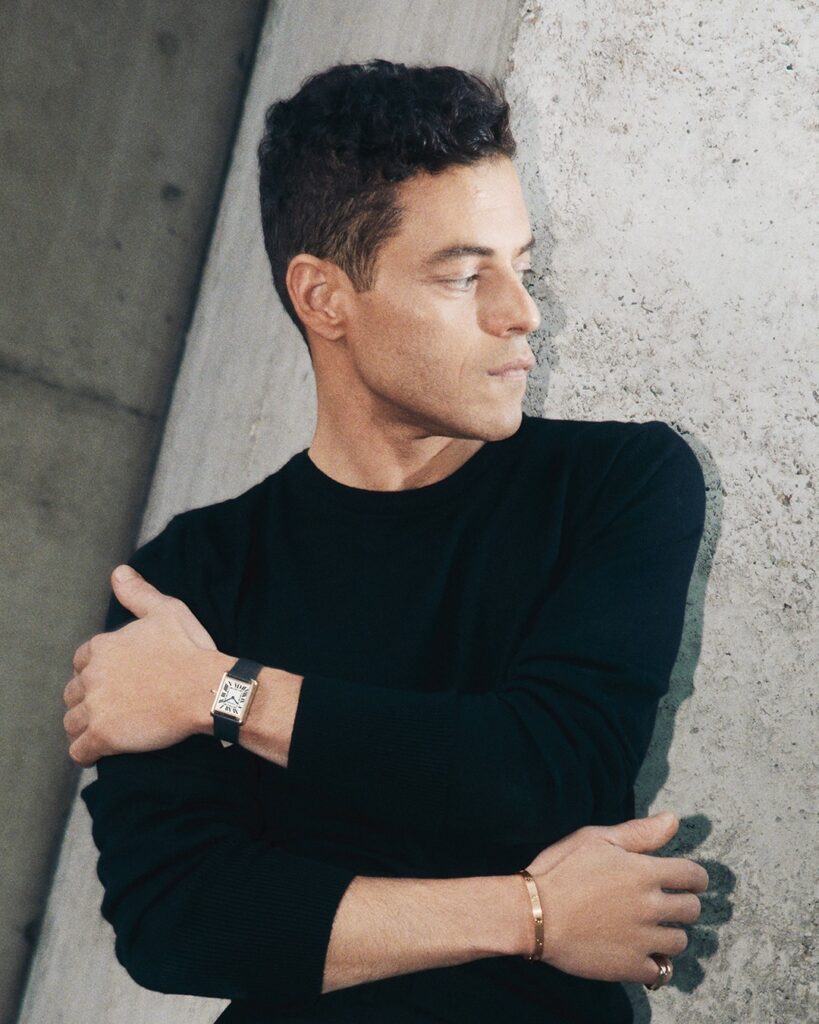
This red-carpet strategy also reflects Cartier’s long-standing fluency in styling watches as inherently gender-neutral objects. Iconic models such as the Tank were conceived as design-first creations rather than gendered products, offered in multiple sizes and historically embraced by both men and women without rigid classification. That philosophy continues today, as Cartier—like a growing number of major watchmakers—moves away from strict “men’s” and “women’s” categories in favor of size, proportion and aesthetic choice. On contemporary red carpets, men wear historically elegant pieces once coded as feminine; women pair bold, architectural designs with minimalist gowns; and non-binary artists mix jewelry and watches in ways that challenge traditional luxury hierarchies. The result is a visual language that aligns perfectly with modern fashion’s emphasis on individuality and self-definition. By allowing celebrities and their stylists to reinterpret its timepieces in highly personal ways, Cartier relinquishes rigid control in favor of cultural relevance, an approach that reinforces the idea of the watch as a living object, continually recontextualized through style.
Moreover, Cartier’s presence on red carpets is rarely isolated. It is often supported by editorial placements, behind-the-scenes content and post-event digital storytelling that extends the lifespan of each appearance. A single photograph can generate millions of impressions across platforms, transforming a fleeting moment into a sustained branding asset. In this ecosystem, Cartier watches become part of a broader luxury narrative that fuses craftsmanship with spectacle, heritage with immediacy.

If red carpets provide Cartier with cinematic impact, digital platforms supply scale, speed and sustained engagement. The maison has carefully adapted its celebrity strategy to a media environment where cultural relevance is shaped not only by glossy campaigns, but by continuous storytelling across social networks. Ambassadors no longer appear solely in seasonal advertising; they surface in short-form videos, backstage moments, personal interviews and stylized social posts that blur the line between campaign content and everyday life.
Cartier’s approach is notably selective. Rather than chasing viral trends, the brand collaborates with personalities whose values, aesthetics and creative output align organically with its identity. This alignment allows content to feel authentic rather than transactional. When an ambassador shares a Cartier watch in a rehearsal studio, on tour, or while preparing for a film role, the watch becomes part of a narrative about creativity, discipline and self-expression, concepts deeply embedded in Cartier’s brand mythology.

Data and analytics also play an increasingly central role. Cartier tracks engagement patterns across regions and demographics, using insights to tailor content formats, posting rhythms and platform priorities. Asia-Pacific markets, for example, respond strongly to video-driven storytelling and idol culture, while European audiences remain highly receptive to heritage-focused narratives. Celebrity partnerships function as adaptable interfaces between these markets, allowing Cartier to communicate a consistent core identity while adjusting tone and emphasis.

Crucially, this digital strategy does not replace Cartier’s heritage, it amplifies it. Archival imagery, historical anecdotes and iconic designs are frequently woven into contemporary content, creating a dialogue between past and present. In doing so, Cartier positions itself not as a nostalgic house, but as a living institution whose history gains meaning through modern interpretation. The outcome is a brand that feels simultaneously timeless and current, an increasingly rare balance in today’s fast-moving luxury landscape.
What This Means for Cartier’s Brand Identity
Cartier’s approach to celebrity collaborations is not transactional; it is about narrative alignment. Each ambassador contributes a unique story, whether it’s heritage and elegance, modern creativity, or global cultural fusion, that complements the maison’s historic identity while propelling it into new markets and conversations.In a luxury landscape where heritage alone no longer guarantees relevance, Cartier’s successful blend of iconic products and influential personalities illustrates how a century-old watchmaker leverages cultural capital and celebrity resonance to remain not just visible, but coveted.
Follow us on our social media channels to stay up to date with the latest news from the world of watchmaking, and discover what’s new on Watchype.
