

With the Winter Olympics heading to Italy for Milano Cortina 2026, the relationship between watchmaking and the Olympic Games once again takes center stage. Timing has always been the invisible backbone of sport, and few brands have embodied this connection as consistently as Omega.
From vintage medals of merit to ultra-modern ceramic cases, from pocket chronometers to space-age titanium, this is a journey through five watches that tell the Olympic story in very different, yet deeply connected, ways.
Omega Milano Cortina 2026: A Contemporary Olympic Trilogy
As Official Timekeeper of the Olympic Games, Omega marked Milano Cortina 2026 with a dedicated trio of watches: the Seamaster 37mm “Milano Cortina 2026”, the Speedmaster 38mm Milano Cortina 2026 and the Seamaster Diver 300M Milano Cortina Edition.
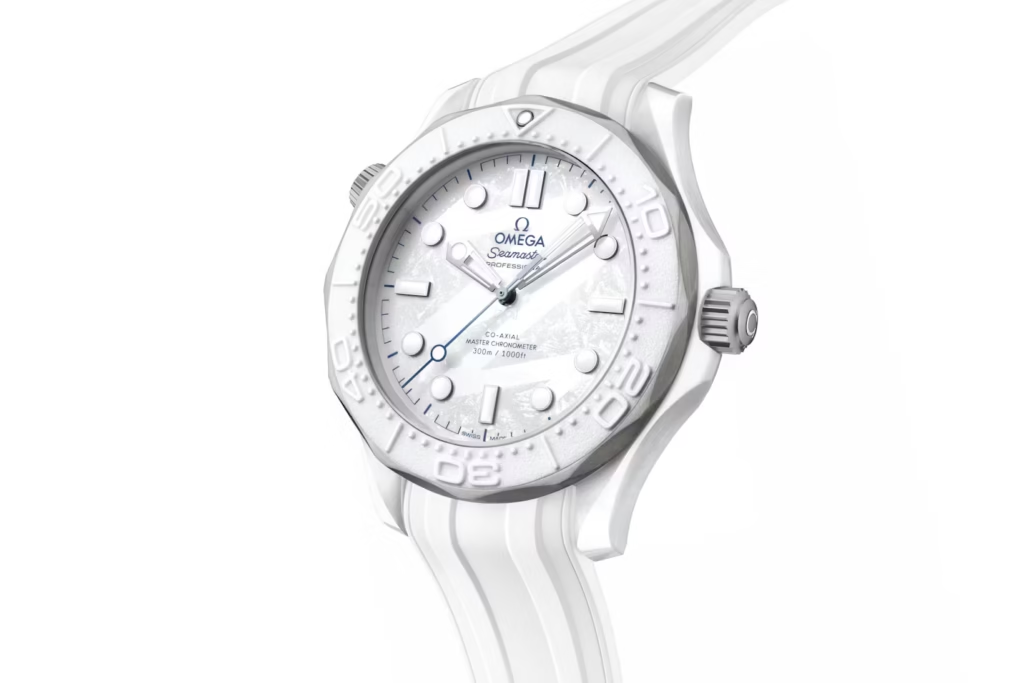
Among them, the Diver 300M clearly stands out. In our view, it is the most successful interpretation of the Olympic spirit, thanks to a design that feels both bold and perfectly in tune with the winter setting. The white ceramic case, a rare choice in this category, immediately recalls snow and ice, while the dial features a finely worked texture that echoes the natural pattern of compacted snow. The result is a watch that avoids obvious symbolism and instead translates the atmosphere of the Winter Games through materials and surface work. Sporty, contemporary and surprisingly elegant, it feels like the true centerpiece of the collection.
Omega 1952 and the Star of Merit
Long before advanced sensors and digital timing systems, Omega was already shaping Olympic history. In 1952, the brand released a watch featuring the Star of Merit, awarded to celebrate the crucial role Omega played in timekeeping at the Olympic Games.
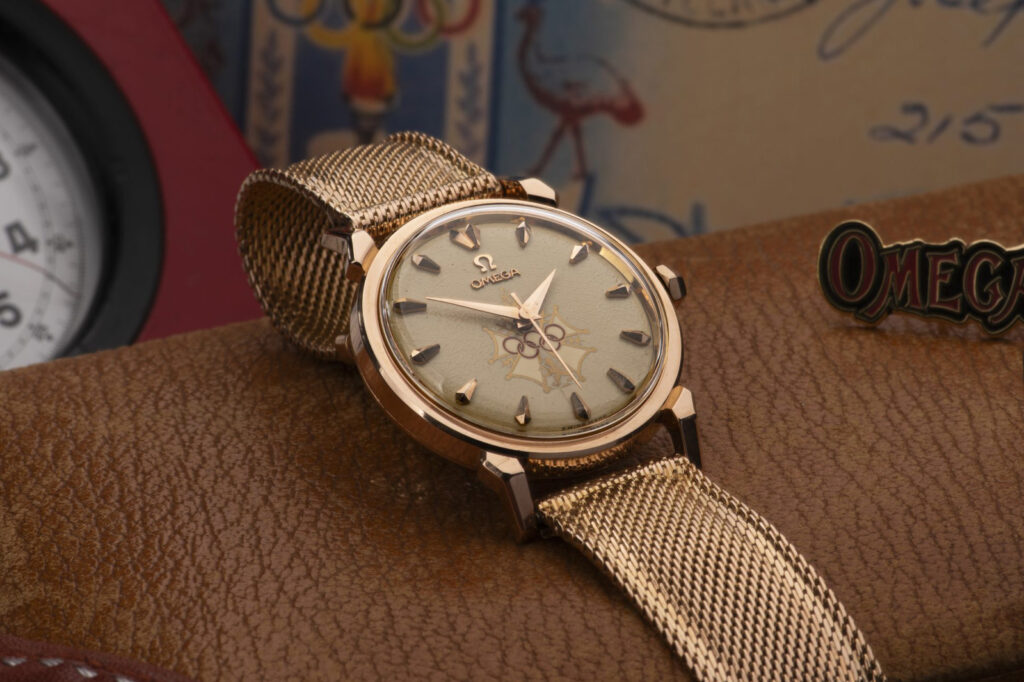
This piece is especially interesting for its case shape, a design that would later become a recurring theme within the Seamaster family. That same silhouette can be clearly seen in the modern Seamaster 37mm Milano Cortina 2026, creating a direct visual link between mid-century Olympic heritage and today’s watches. It is a reminder that Olympic-inspired design at Omega is built on continuity rather than nostalgia.
Pocket Chronometers and Olympic Timekeeping
Before wristwatches became the primary tools of sport, pocket chronometers were essential for measuring athletic performance. Researching historical Olympic equipment reveals numerous examples commissioned for different Olympic committees, and once again Omega was at the forefront of this evolution.
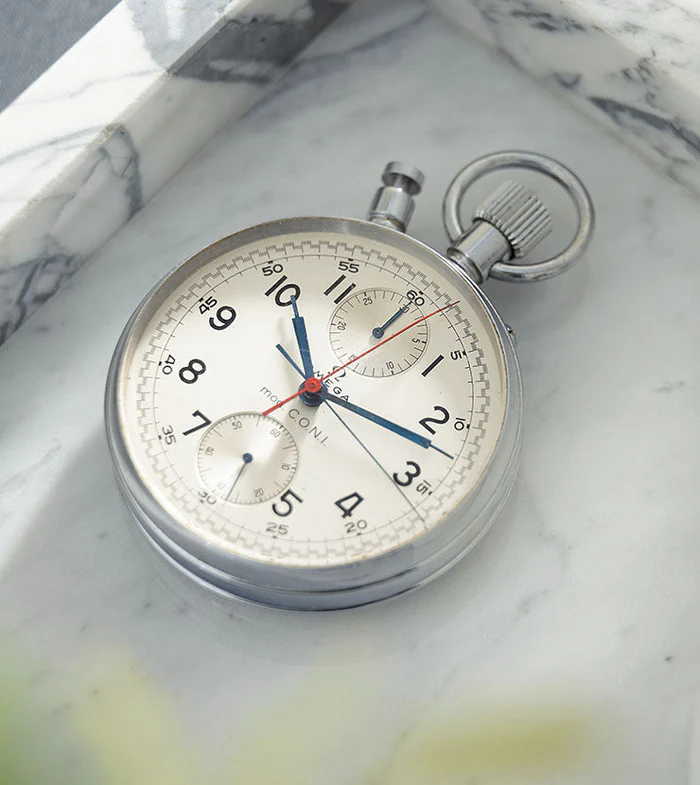
One particularly fascinating piece is a pocket chronometer engraved on the caseback with CONI, the Comitato Olimpico Nazionale Italiano. These instruments may appear simple by modern standards, but they represent a fundamental chapter in Olympic history, when precision relied entirely on mechanical mastery and the hands of trained timekeepers.
Mondo Duplantis and the Titanium Aqua Terra
Omega’s Olympic presence is not limited to commemorative pieces. It can also be found directly on the field of play. One of the most striking recent examples is the titanium Aqua Terra worn by Mondo Duplantis, one of the most extraordinary athletes of our time.

At the Paris 2024 Olympic Games, Duplantis broke the world record in pole vaulting while wearing an ultra-light Aqua Terra in titanium. The watch, later released as a limited edition dedicated to him, reflects the same philosophy that defines his performance: extreme efficiency, reduced weight and uncompromising precision. It is a modern sports watch in the truest sense, designed not just to celebrate achievement, but to accompany it.
Johan Blake and the RM38
Moving away from Omega, one of the most iconic Olympic watch stories of the past decade belongs to sprinter Johan Blake. At the London 2012 Olympic Games, Blake competed wearing the Richard Mille RM38, a watch as radical and high-performance as the athlete himself.

After winning the silver medal, the RM38 was sold the following year at the Only Watch charity auction, instantly becoming part of modern horological legend. That moment marked the beginning of a deeper collaboration, culminating in the RM 59-01, a unique piece bearing Blake’s name. It represents a different approach to Olympic watchmaking, one that embraces experimentation, exclusivity and the extremes of technical design.
When Seconds Become Legacy
From engraved pocket chronometers to ceramic dive watches inspired by alpine snow, Olympic watches tell stories that extend far beyond timekeeping. They capture moments of human achievement, technical progress and cultural identity.
As Milano Cortina 2026 approaches, these five watches remind us that behind every medal and every record lies a perfectly measured second, and the watches that made it possible.
Follow us on our social media channels to stay up to date with the latest news from the world of watchmaking, and discover what’s new on Watchype.
