

The fourth edition of Milano Watch Week has brought in some serious stake. An unparalleled lineup of 50+ brands and manufacturers has made their time in Palazzo Mezzanotte, at the very centre of Italian economic beating heart.
Both big players and small, enterprising ateliers spent 3 days delivering knowledge and sharing their inventions to a warm and passionate audience of enthusiasts.
Among these, I had the chance to meet Dominique Renaud, a living legend in the watchmaking industry who took the stage at the beginning of the overwhelming quartz crisis, and never had a stop since then.
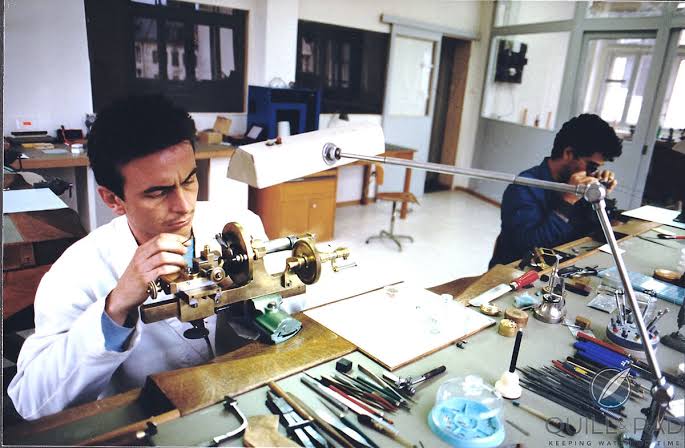
From Renaud & Papi, through being the spearhead of Audemars Piguet’s productive asset, to dedicate his second watchead life as an independent, pioneering inventor, peaked with the launch of the Pulse60: a watch which balance spring oscillates at a surprisingly low 1Hz frequency, with an even more mind blowing 720° amplitude that overcomes the technical constraint deriving from low oscillation (G Force, dead time and hitting or speed shocking).
We had a brief but intense conversation about this new milestone, together with the Fondation Dominique Renaud, its non profit committee where horological knowledge meets different branches of sciences studies to question the established significance and declination of the concept of Time.
Stefano: Good Moring Dominique. First of all, this is your first time here in Milan for this edition, correct?
Dominique Renaud: Yes, it is my first time here for this edition. I believe it is the fourth edition, isn’t it?
Stefano: Yes, the fourth.
Dominique Renaud: I discovered Milan about thirty years ago, so I have known the city for a long time, but I had never experienced it like this. Milan has changed enormously. The atmosphere is magnificent. There are so many people, a real energy. [Talking about the venue] For this week, Milan really feels like the centre of the watchmaking world. There are collectors, enthusiasts, professionals, everyone is here. It is a wonderful moment.
Stefano: Milan is for Italy what you are for Swiss watchmaking: a sort of bridge between tradition, finesse and innovation, and your latest creation, the Pulse60, represents another important statement in terms of engineering. I wanted to ask you: When did it come the moment in which you started questioning Amplitude, rather than frequency?
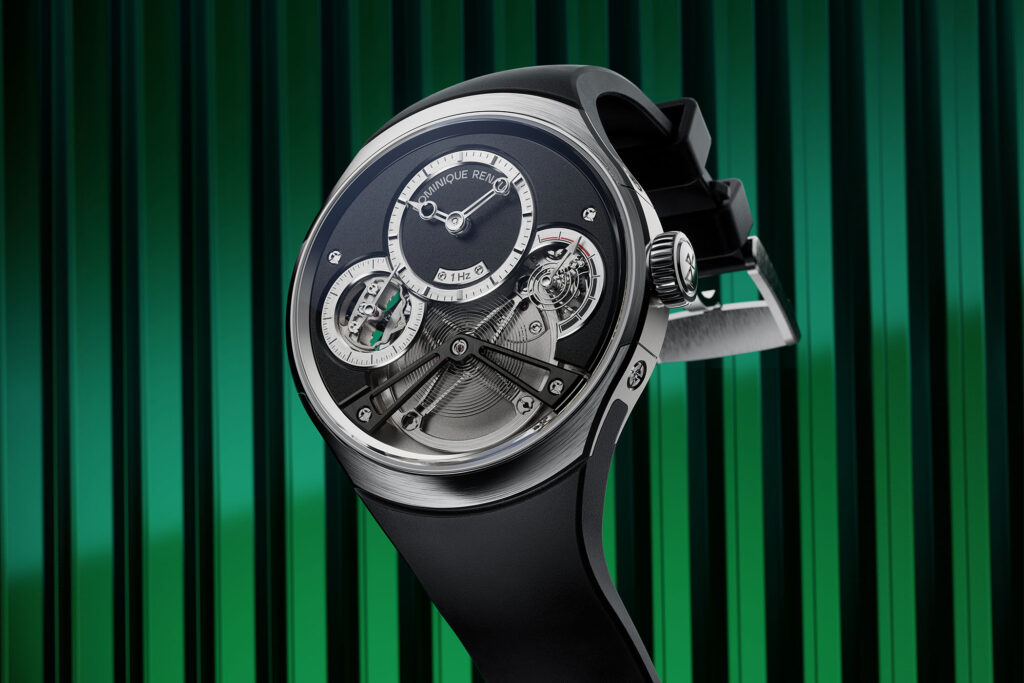
Dominique Renaud: At the beginning, I wasn’t thinking about amplitude. I was thinking about creating a low-frequency movement.
Then, through the experiments we carried out, I understood that the problem with low frequency is that the balance tends to swing more. If you have a large balance moving at around 300 degrees, for example, you risk having problems when the watch is subjected to movement and shocks.
So I started thinking about combining low frequency with high amplitude. The idea was that, even at a low frequency, you could have enough velocity in the balance to make it less sensitive to shocks.
The greater the amplitude, the greater the velocity, and the less sensitive the system becomes to movement and shocks. So amplitude was really the solution to a problem created by low frequency.
Stefano: You had previously experimented very high frequency with the DR-01, which is almost the opposite approach. When did you realise that changing your perspective on frequency could lead to something potentially more reliable?
Dominique Renaud: I wouldn’t say that low frequency is necessarily better. Every frequency has advantages and disadvantages. Low frequency is actually somewhat more sensitive to shocks.
But you have to distinguish between static and dynamic conditions. If you look at a pendulum, for example, pendulums can be extremely precise, even with a very low frequency and a very heavy oscillator. Why? Because they operate in a static environment.
A watch is often tested in a similar way. When you put it on a machine and measure it, the watch is essentially static. But when you wear it, it is completely different.
In real life, there is no machine controlling the watch. Its behaviour depends on the person wearing it. Is that person sitting in front of a computer? Are they running? Are they moving their arm constantly?
Dynamic conditions are much more difficult to control. That is why traditional watch testing is generally carried out under static conditions. This is also why Swiss watchmaking standards traditionally include static testing. There are now more specialised tests that try to reproduce wearing conditions, but testing a watch dynamically is not easy.
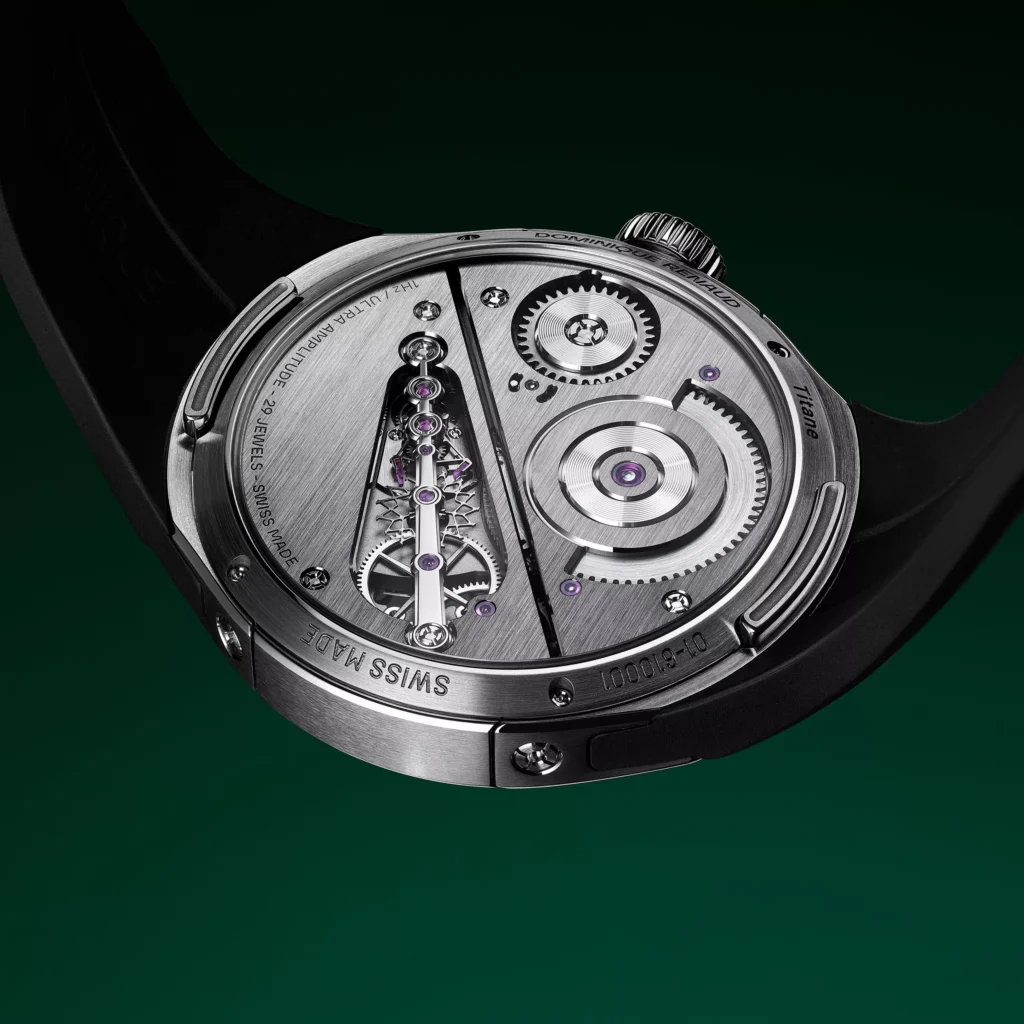
Stefano: Amplitude is the very centre of your study and it also takes a wider meaning when it comes to Fondation Dominique Renaud: here it refers not only to the technical aspect of the regulating organ, but embraces different perspectives of investigating.
Dominique Renaud: Exactly. “Amplitude” is actually a play on words. In the context of the Foundation, it means something broader, raising the level intellectually, exploring ideas and pushing beyond conventional boundaries.
That is why we chose the name Amplitude. It creates a connection with the watch, but the Foundation is not only about the technical meaning of amplitude. It is also about amplitude in a much broader, almost philosophical sense.
Stefano: Your most recent symposium explored the concept of time. The first edition brought together writers and explored how we perceive time, while the second edition involved astrophysicists and asked whether time is independent of human perspective or simply a construct.
What will be the subject of the next symposium?
Dominique Renaud: Unfortunately, it is still too early to say. We have several possibilities in mind, but we haven’t decided yet what the next edition will be about. I would rather not reveal anything at this stage.
Stefano: Of course, we understand.
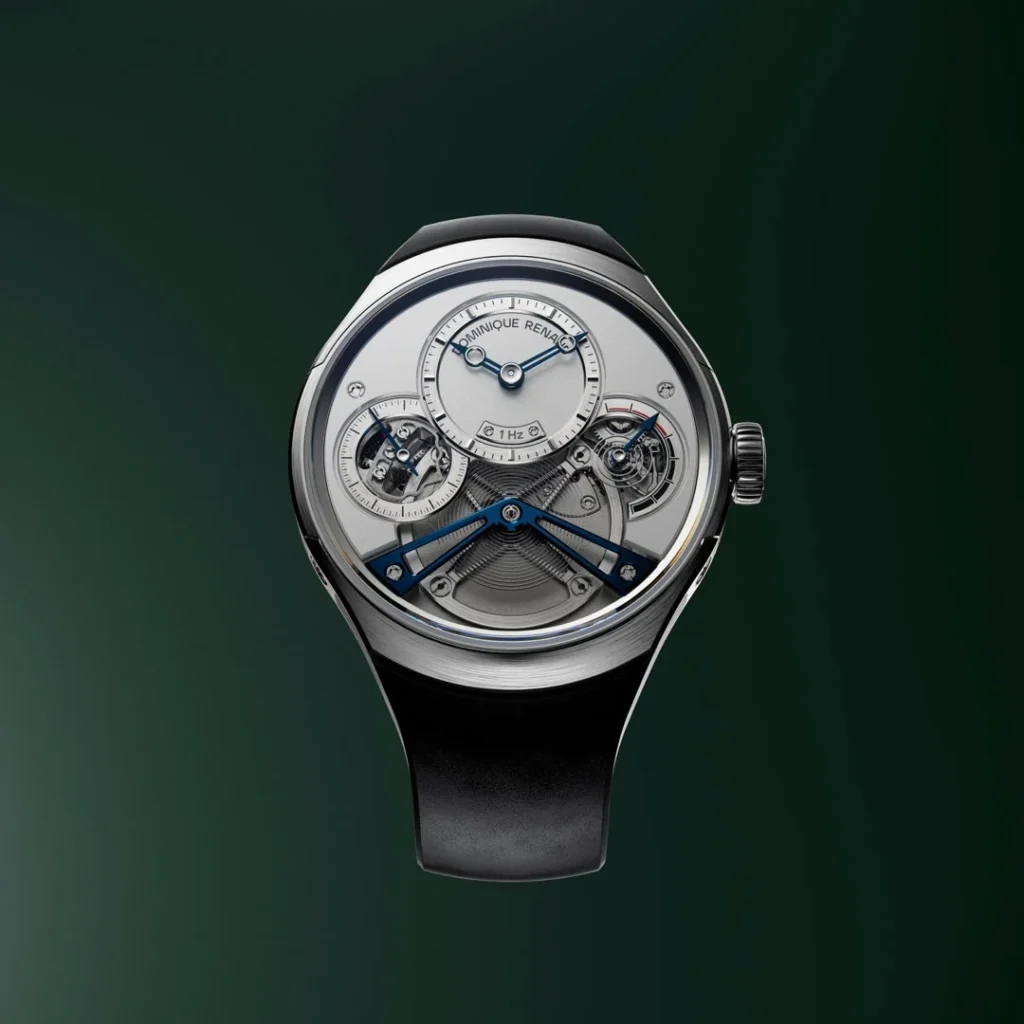
Stefano: In the context of the Foundation, you and your team have also developed a form of artificial intelligence called DOM, correct?
Dominique Renaud: Yes, DOM, as the first three letters of Dominique. We developed this application to collect different observations from nature and from different scientific fields, and then bring that knowledge back into horology, almost creating an archive that allows you to understand whether something has already been discovered or patented.
Stefano: How do you think this kind of technology, and artificial intelligence more generally, will change the way the next generation of watchmakers approaches watchmaking?
Dominique Renaud: When Julio Papi and I started, we were also working with technologies that were considered very advanced at the time. There were almost no computers, and very few machines. We were among the first to use them.
People would tell us, “This isn’t real watchmaking. You have to do everything by hand.”
Then, eventually, everyone started using modern machines, and we realised that you could still create beautiful watchmaking because, behind the machines, you still have the hand, the finishing, the prototype and the assembly.
I think AI can do something similar. Someone like me, for example, is not particularly good with computers. With AI, I can potentially create a relationship between the computer and the watchmaker.
The watchmaker can work on new calibres, new functions and new complications. I don’t think AI will remove the need for the prototype or for something to be physically manufactured and finished.
It is simply a tool that makes invention easier.
At the end of the day, all these technologies are tools for the watchmaker. The watchmaker remains at the centre of the creation of a watch.
AI can help you explore an idea, but the watchmaker is still the person who guides the machine and decides whether what it produces is interesting.
It is not about having the machine do the work instead of the watchmaker. It is about giving the watchmaker more possibilities.
But, creation will always remain human.
A computer can save time because, in the past, you had to test something, modify it, test it again and start over. A computer can propose several possible directions much more quickly.
That makes creation easier, but at the same time it can actually increase the amount of creative work.
Sometimes, in watchmaking, we repeat the same ideas. We make a tourbillon, then a double tourbillon, then a triple tourbillon. At a certain point, we need to open new paths.
That is what I see in AI. It can help us open new paths.
Stefano: So, based on all of this, what do you think will be the next game-changing development in watchmaking? We have gone from new complications to new materials and new technologies. What could fundamentally change the industry next?
Dominique Renaud: For me, the next major thing is artificial intelligence. We are only at the beginning.
I think the use of AI will be a revolution that is still to come. Of course, we also have to learn how to control it because, at the same time, people are afraid of it.
It is still important to preserve hand craftsmanship, careful finishing and everything that makes watchmaking what it is. But when I think about the next major transformation, I don’t really see anything more significant than artificial intelligence.
There are perhaps two or three materials that could still be very interesting, but for me the major developments are AI and 3D printing.
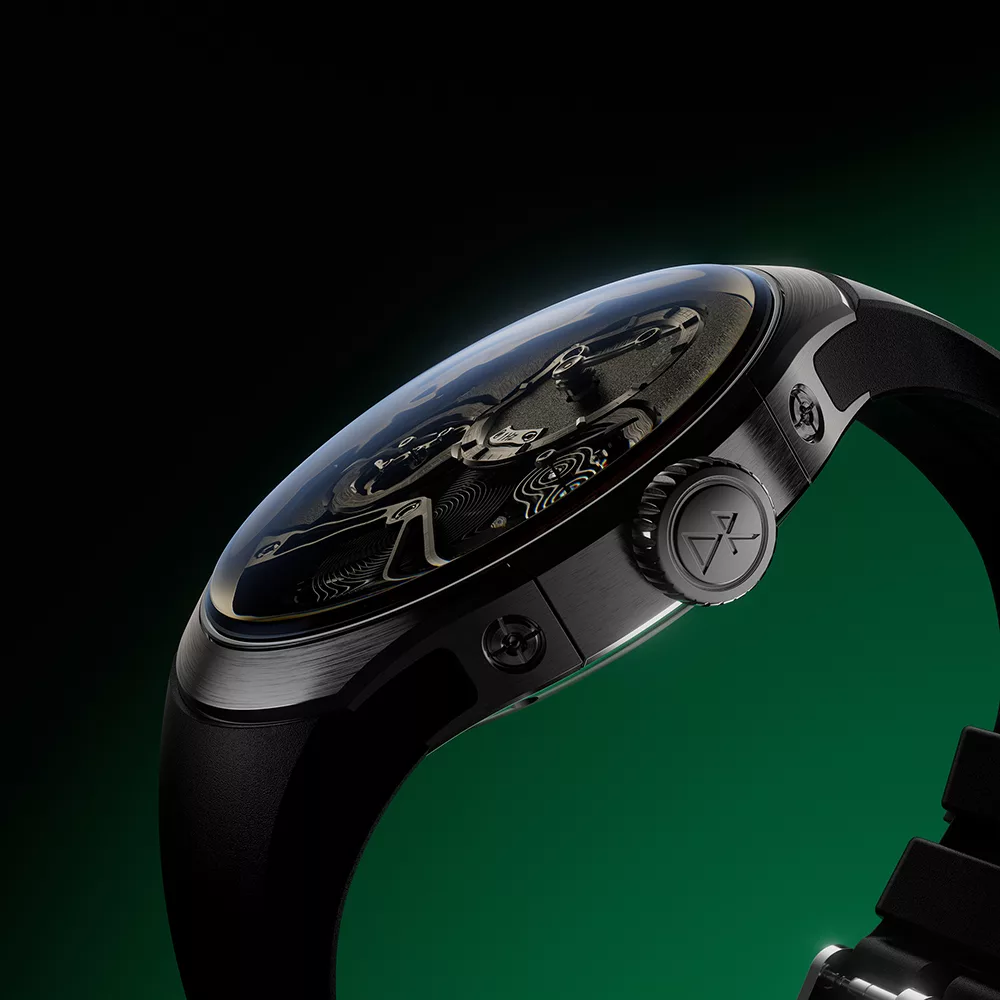
Stefano: Let me ask you something related to your latest development. If the artificial intelligence system developed by the Foundation had existed before the actual development of the Pulse60, do you think the development of your watch would have been different?
Dominique Renaud: Yes, I think it would have changed things, particularly in terms of reducing errors and saving time.
We had to develop several different hairsprings and carry out many calculations and tests. Today, with the power of AI, we could probably have saved a lot of time.
We spent around three years finding the right solution. Now, with these technologies, you can calculate things much faster and follow the results almost immediately.
This is important because development is extremely expensive. If you can save time during development, you can potentially make a better watch with fewer errors and reduce the time required to bring it to the market.
The final conclusions might have been the same, but we would probably have reached them after far fewer practical tests.
Stefano: jumping on this before closing, how many tests did you actually carry out during the development of the watch?
Dominique Renaud: At the beginning, we developed a hairspring in silicon.
Then we realised that the approach had limitations, so we went back and worked on another solution. The first prototype was made using silicon, but eventually we returned to a more traditional hairspring.
The difficulty was finding someone capable of manufacturing it because the hairspring was extremely special. It had almost nothing in common with what already existed.
It is very difficult to find people who can manufacture these kinds of hairsprings.
Eventually, we found someone who understood the concept, and together we carried out different tests. After a number of experiments, we found the solution and continued testing it together.
Follow us on our social media channels to stay up to date with the latest news from the world of watchmaking, and discover what’s new on Watchype.
