

Watchmaking is often associated with traditional craftsmanship, heritage, and long-established maisons; mostly family-run businesses whose histories span decades or even centuries. Richard Mille stands in sharp contrast to this perception. From its inception, the brand positioned itself as a disruptive force, fundamentally rethinking what a luxury watch could be.
By integrating cutting-edge materials such as aerospace-grade titanium, carbon and graphene composites, advanced ceramics, and precious metals, Richard Mille brought engineering-driven innovation into the heart of haute horlogerie. What began as a boutique, independent venture rapidly evolved into a globally recognised brand, deliberately targeting high-performers and elite athletes, and in doing so redefining both the purpose and the contemporary image of the luxury watch.
Above the Bar, Beyond Limits: Barshim and the Art of Lightness
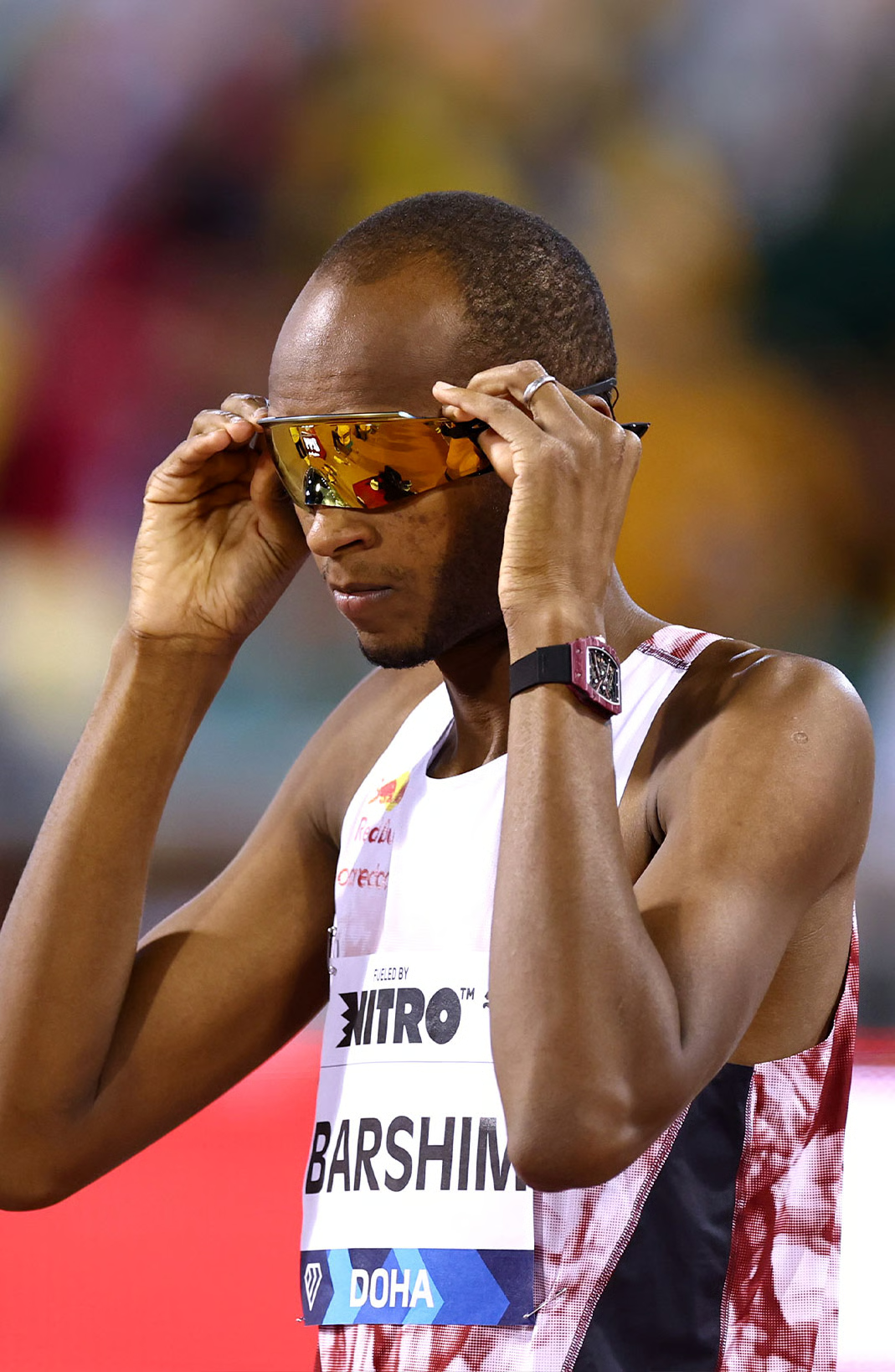
Qatari high jumper Mutaz Essa Barshim has been a Richard Mille brand ambassador since the 2016 Rio Olympic Games, marking the beginning of a close collaboration between the athlete and the brand. Following this partnership, Richard Mille developed a bespoke timepiece for Barshim, the RM 67-02 High Jump, designed specifically to meet the demands of elite athletic performance.
Engineered Like an F1 Car: The Richard Mille Philosophy
Richard Mille’s close relationship with Formula 1 and Ferrari is expressed not only through sponsorships but through watches specifically engineered for the extreme conditions of motorsport. Drivers such as Charles Leclerc, Fernando Alonso, and Romain Grosjean are regularly seen wearing Richard Mille timepieces designed to withstand intense vibrations, high G-forces, and extreme temperatures experienced on the track.
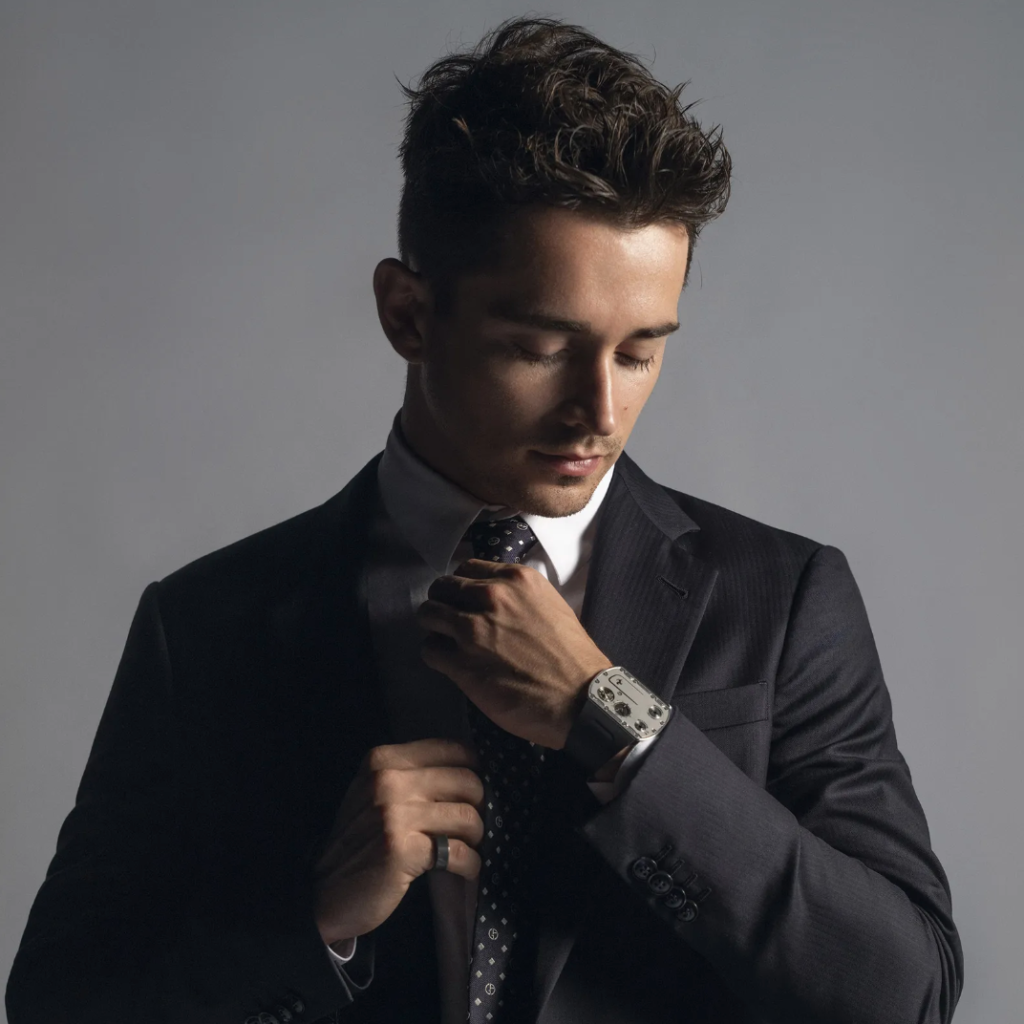
Models such as the RM 67-02 worn by Leclerc, or the RM 50-03 McLaren F1 worn by Alonso developed for racing environments exemplify the brand’s focus on ultra-light construction, shock resistance, and ergonomic comfort. These watches are not symbolic accessories, but functional instruments that mirror the precision, performance, and resilience required at the highest level of Formula 1. On the wrist of one of their ambassadors, Charles Leclerc, it can be seen as a true tool before, during and after the race.
Dominating the Monuments with Mathieu van der Poel and Tadej Pogačar
Richard Mille’s involvement in professional cycling reflects the same performance-driven philosophy seen in motorsport and athletics. The brand collaborates with elite cyclists such as Matthieu van der Poel and Tadej Pogačar, athletes who compete in disciplines defined by endurance, precision, and extreme physical stress. Both riders are known for wearing ultra-light Richard Mille timepieces during training, competition, and podium appearances; watches engineered to withstand constant vibration, impact, and long hours of exertion.
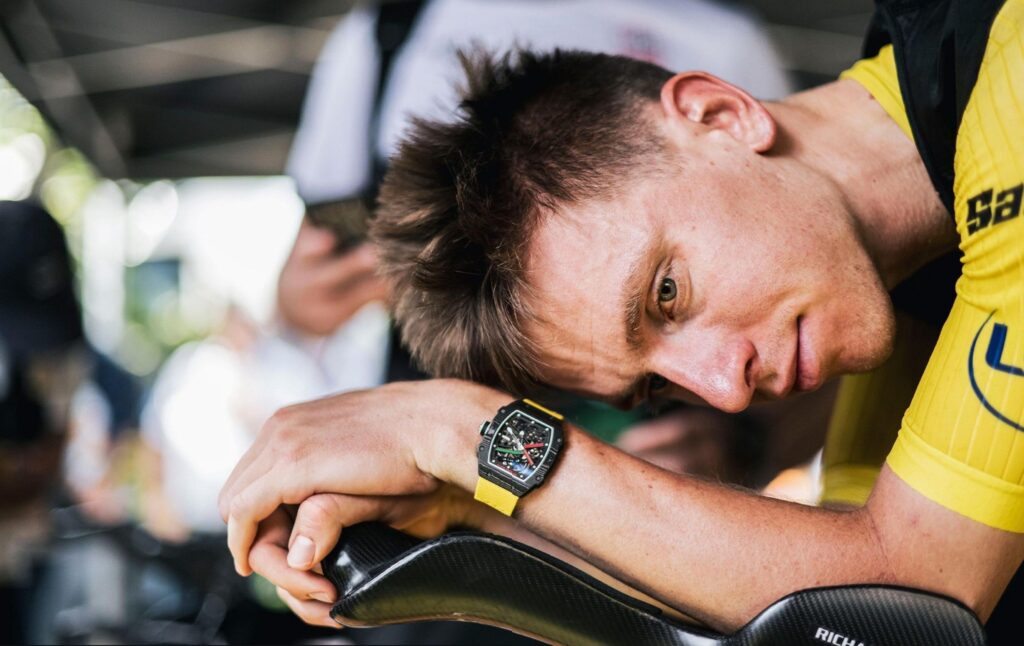
Models developed for cycling prioritize minimal weight, shock resistance, and ergonomic comfort, aligning seamlessly with the demands of elite road racing. Through these partnerships, Richard Mille reinforces its identity as a watchmaker whose creations are built not only to be worn, but to perform in the most demanding sporting environments.
Richard Mille and The King of Clay
Richard Mille’s collaboration with professionals extends all the way to tennis. They elevate their performance-driven philosophy beyond motorsport and into one of the most physically demanding individual sports. Through partnerships with elite players such as Alexander Zverev and Rafael Nadal, Richard Mille demonstrates that its watches are engineered not as symbolic endorsements, but as functional tools capable of enduring extreme athletic conditions.
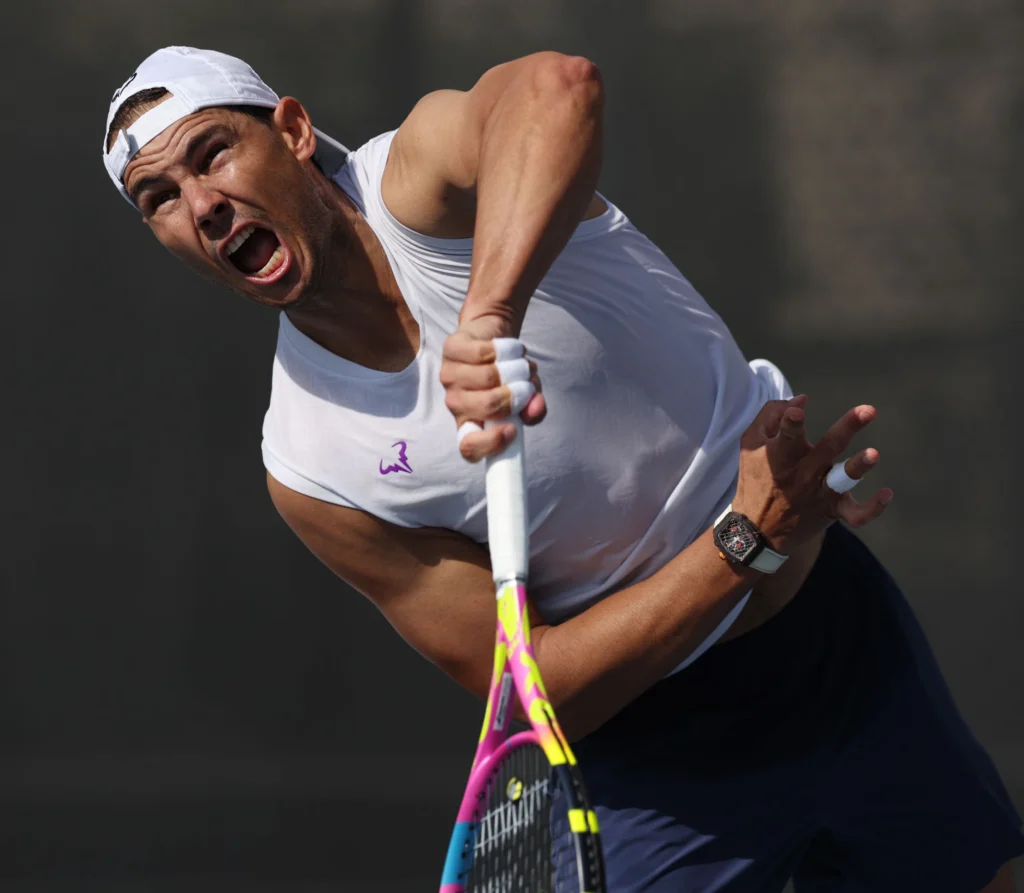
Models such as the RM 27 series worn by Nadal during matches are designed to withstand intense shock, constant wrist acceleration, and repetitive high-impact movements, while remaining exceptionally light and comfortable. Zverev, similarly, has been seen wearing ultra-light Richard Mille timepieces adapted to the fast-paced, high-stress environment of professional tennis. On the wrists of athletes competing at the highest level, these watches function as true performance instruments tested on court before, during, and after play and mirroring the precision, resilience, and endurance required in elite tennis.
Conclusion
Richard Mille has shown that these collaborations are far more than image-driven partnerships. Yes, from a marketing perspective they are extraordinarily powerful, but stopping there would miss the point. Through constant dialogue with athletes and with worlds where performance is a matter of survival, from racetracks to athletics tracks, from tennis courts to Formula 1 cockpits, the brand has built a real, extreme laboratory in which to test and develop its ideas.
This approach has allowed Richard Mille not only to innovate, but to push an already radical concept of watchmaking into territories that, twenty years ago, seemed almost unimaginable: structural lightness, shock resistance, and ergonomics under extreme conditions.
In this sense, they stand among the greatest innovators of modern horology. And a significant part of that leadership comes directly from their connection to these figures and to the world of elite sport, not as ambassadors, but as true development partners. Many Richard Mille solutions were born in their legs, their arms, their accelerations, and their impacts.
Follow us on our social media channels to stay up to date with the latest news from the world of watchmaking, and discover what’s new on Watchype.
