

Among the many milestones in the history of Patek Philippe, few watches capture the essence of late-20th-century haute horlogerie quite like the reference 3974. Introduced in 1989 and produced until 2000, this extraordinary wristwatch combines breathtaking aesthetics with formidable mechanical complexity.
Personally, I find the 3974 nothing short of incredible. Its design is timeless, its mechanics astonishing, and together they form a watch that perfectly embodies what collectors today call the neo-vintage golden era. It is a reference that is well known and respected among collectors, frequently commanding impressive figures at auction, yet it still feels like a watch whose story is not finished. There remains room for it to further assert its place among the most important wristwatches ever made.
An Evolution of the 3940 — And the Most Complicated Wristwatch of Its Time
Stylistically, the reference 3974 clearly follows the aesthetic language established by the reference 3940 introduced in 1985. The elegant layout of the perpetual calendar dial, with its harmonious balance of sub-dials and moonphase display, was already considered one of the most refined designs in modern watchmaking.
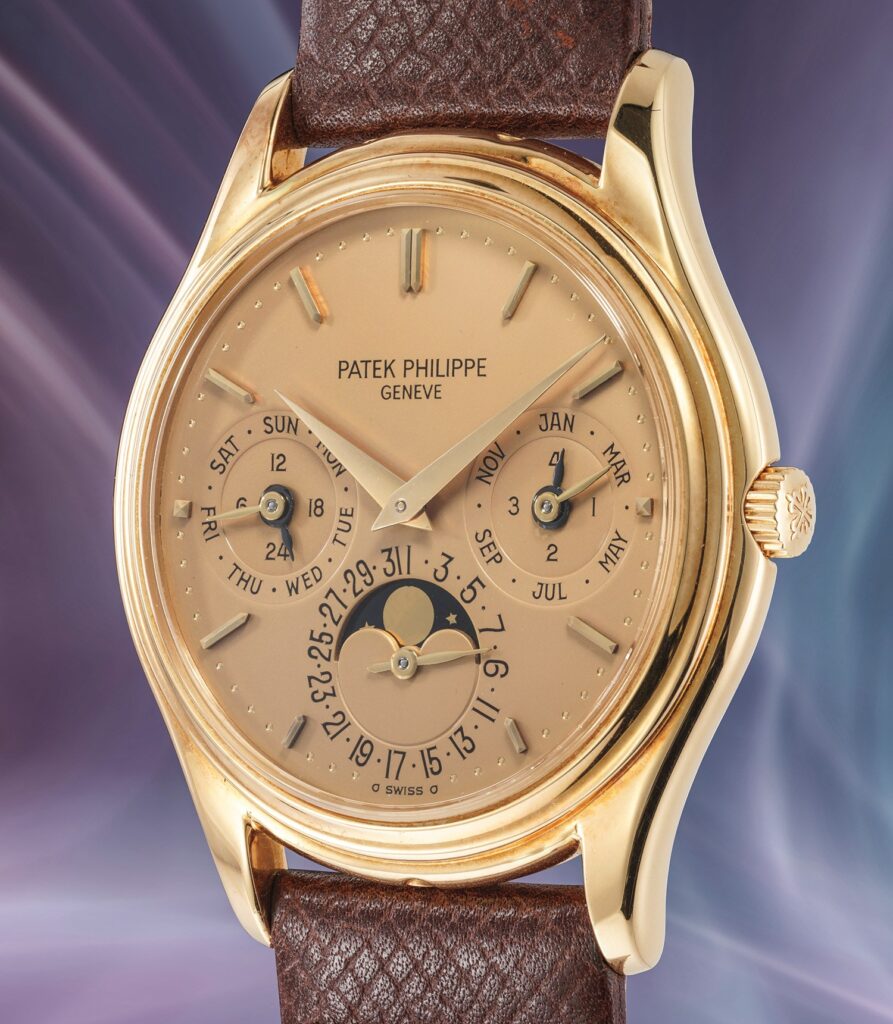
The 3974 elevated this concept to an entirely different level. Introduced in 1989 to celebrate the 150th anniversary of Patek Philippe, it incorporated a major mechanical upgrade: the addition of a minute repeater to the perpetual calendar mechanism. At the time of its release, this combination made it the most complicated wristwatch ever produced by the brand.
At the heart of the watch beats the caliber 27RQ, a remarkably thin automatic movement measuring only 6.8 mm in height and composed of 467 individual components. Despite the complexity of the mechanism, the movement remains elegant and refined. One of its most fascinating technical features is the micro-rotor, which allows an unobtrusive view of the superbly finished movement while still providing the practicality of automatic winding.
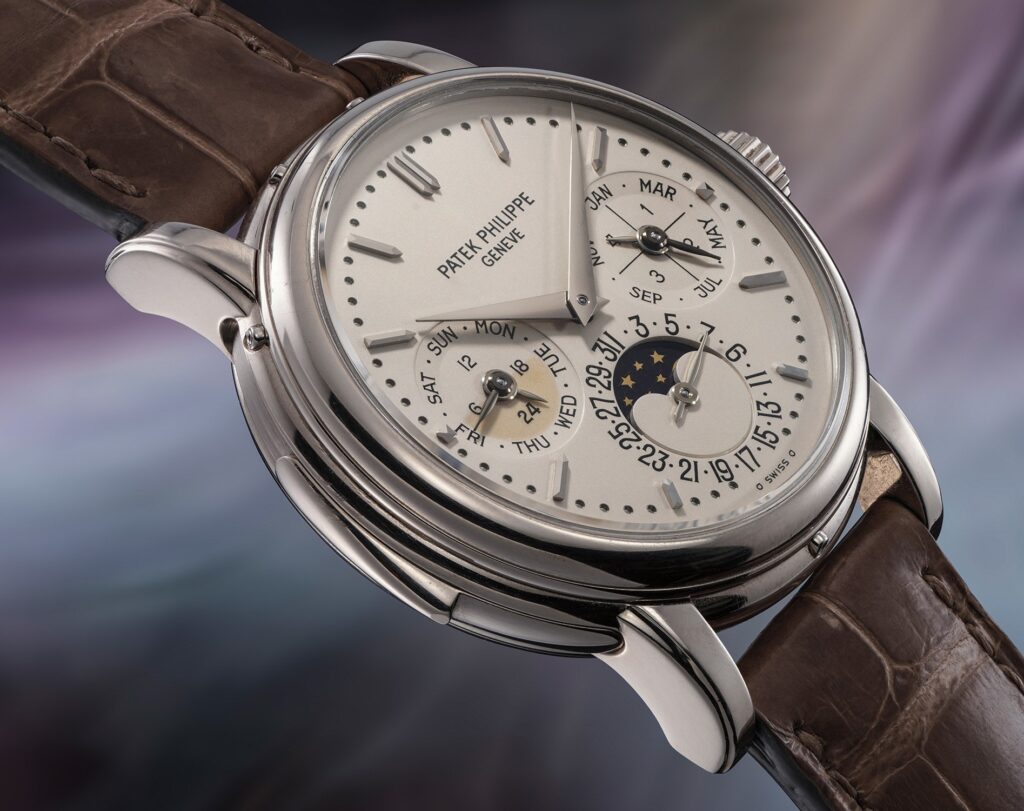
The reference 3974 also holds an important place in horological history as the first automatic-winding minute repeating wristwatch ever produced, reaching the market slightly before Blancpain’s reference 5335.
The Hagmann Case
While the mechanics of the 3974 are extraordinary, the case itself is equally remarkable. Its architecture takes inspiration from the iconic reference 2499, particularly in the stepped bezel and elegantly arched lugs. At the same time, the overall proportions give the watch a modern presence that distinguishes it from earlier designs.
To achieve both aesthetic refinement and acoustic excellence, Patek Philippe turned to Jean-Pierre Hagmann, widely regarded as one of the greatest watch case makers of his generation.
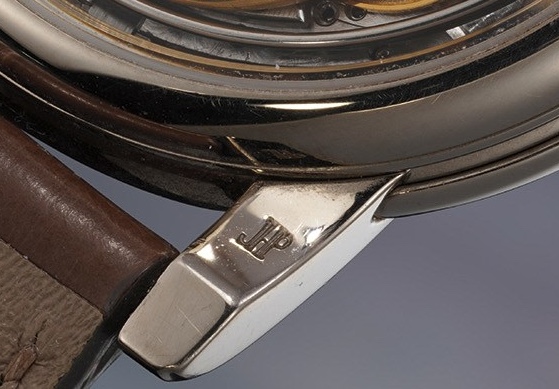
Hagmann was tasked with creating a case that could not only house the movement beautifully but also serve as an ideal sound carrier for the delicate chimes of the minute repeater. The result is considered one of the finest repeater cases ever produced. Early examples bearing Hagmann’s “JPH” hallmark inside the caseback are particularly sought after by collectors today.
His career is a fascinating chapter in Swiss watchmaking. Hagmann began by crafting watch bracelets at Gay Frères before going on to produce cases for some of the most prestigious brands in Switzerland. One of his most impressive achievements was the production of about 20 cases for Patek Philippe’s monumental Star Calibre 2000 pocket watch in only six weeks.
Thanks to the technical expertise of Patek Philippe combined with Hagmann’s extraordinary savoir-faire, the chimes of the 3974 are widely admired. They are crystal clear, perfectly timed, loud, and extremely pleasant to the ear.
Production and Rarity
The reference 3974 remained in production from 1989 until 2000, but its extreme complexity meant that very few examples were ever manufactured during those eleven years.
Approximate production figures are believed to be around 115 pieces in yellow gold, about 20 pieces in rose gold, approximately 5 pieces in white gold, and 9 pieces in platinum.
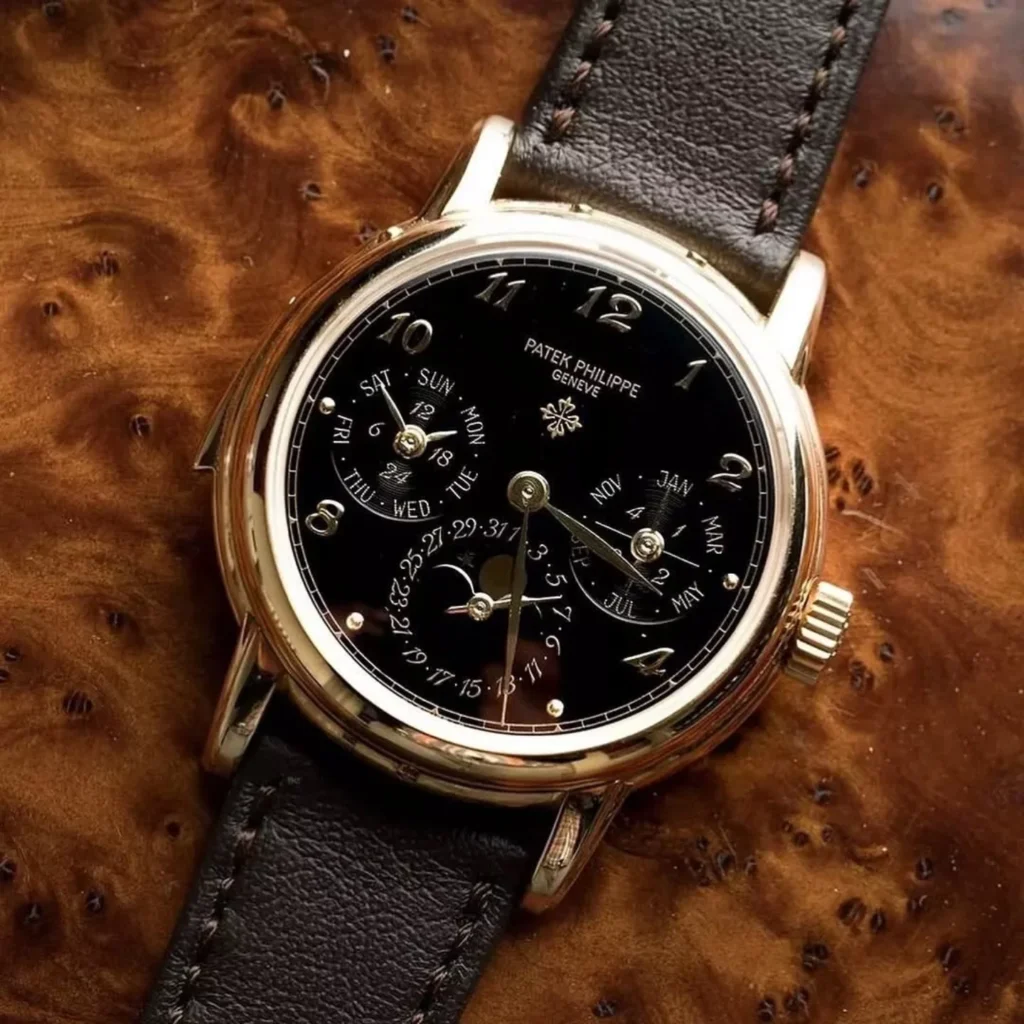
These numbers underline just how rare the reference truly is. Even within the already exclusive world of grand complications, the 3974 stands out as an exceptionally scarce watch.
Auction Results and Growing Interest
In recent years, the reference 3974 has experienced a noticeable increase in collector interest, reflected clearly in the results achieved at major international auctions.
Examples in yellow gold in excellent condition typically reach prices between 500,000 and 600,000 euros. These results already place the watch among the most valuable neo-vintage Patek Philippe wristwatches.
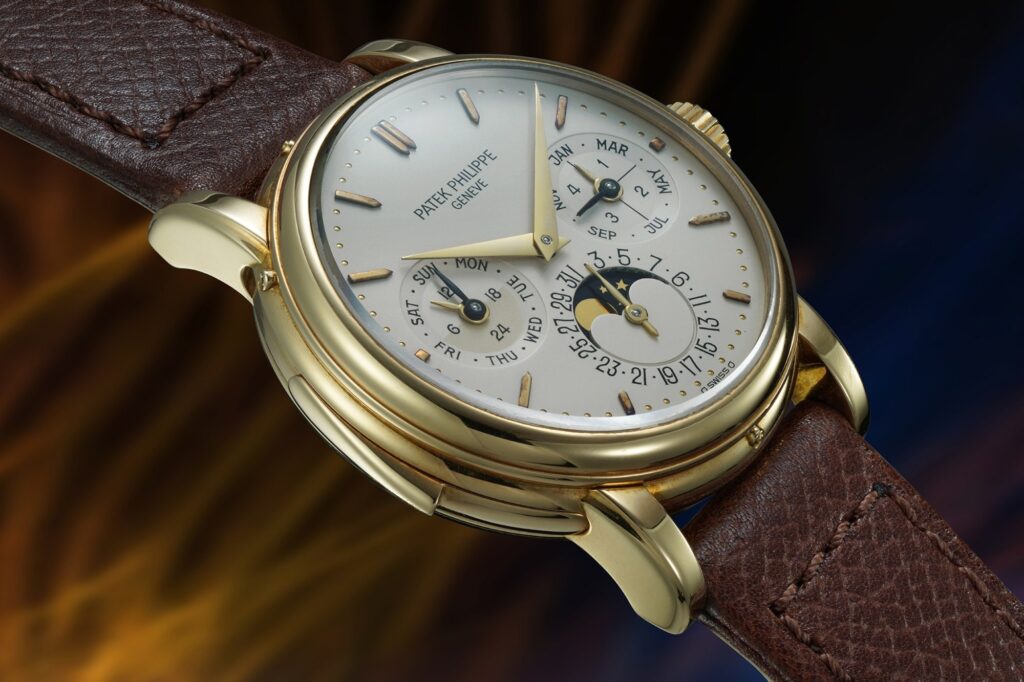
The rarest metals, however, command significantly higher figures. A notable example is a white gold 3974 sold in November by Phillips in Geneva for more than 1.1 million euros, demonstrating how strongly collectors value the most elusive versions of this reference.
Overall, auction performance suggests a steadily growing appreciation for the watch, with many collectors increasingly recognizing its historical and technical importance.
Conclusion
The reference 3974 stands as one of the most remarkable wristwatches ever produced by Patek Philippe.
It combines the timeless aesthetic introduced by the 3940 with a level of technical sophistication that remains extraordinary even by modern standards. The union of a perpetual calendar and an automatic minute repeater was an exceptional achievement in 1989 and remains a rare and demanding complication today.
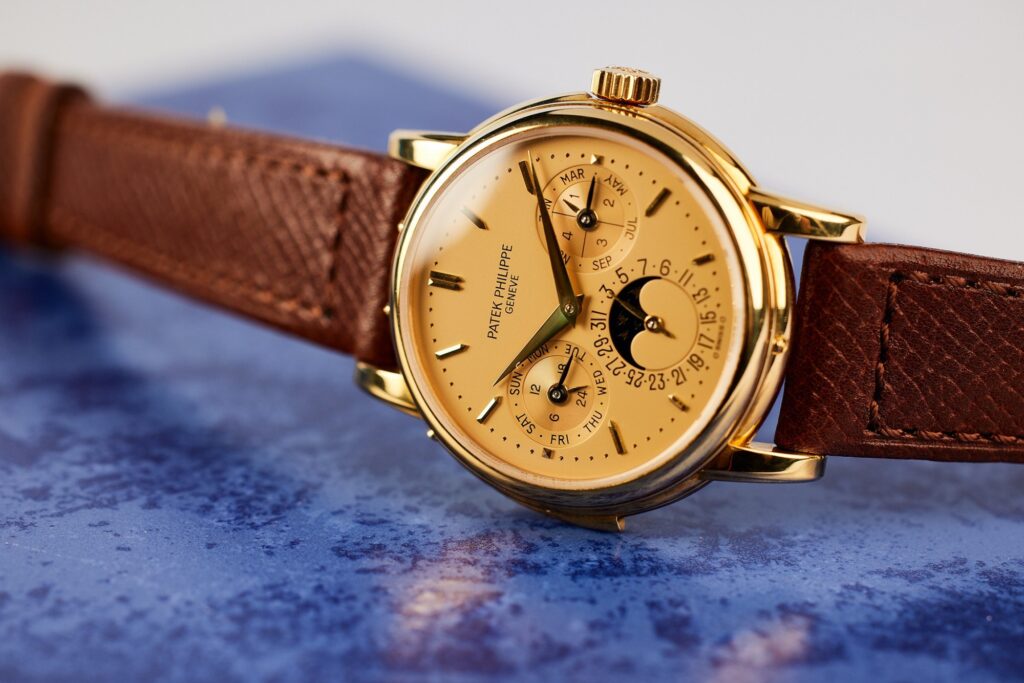
From both a historical and mechanical perspective, the 3974 is incredibly relevant. It represents the meeting point between elegant design and extreme technical refinement, capturing a moment when Patek Philippe was defining the future of complicated wristwatches.
More than three decades after its introduction, the reference 3974 still embodies the spirit of high watchmaking and remains a powerful testament to what Patek Philippe represents.
Follow us on our social media channels to stay up to date with the latest news from the world of watchmaking, and discover what’s new on Watchype.
