

I’d like to take you with me on a journey, into one of the most incredible watches I’ve ever come across, and certainly one of the most meaningful I’ve had the chance to write about.
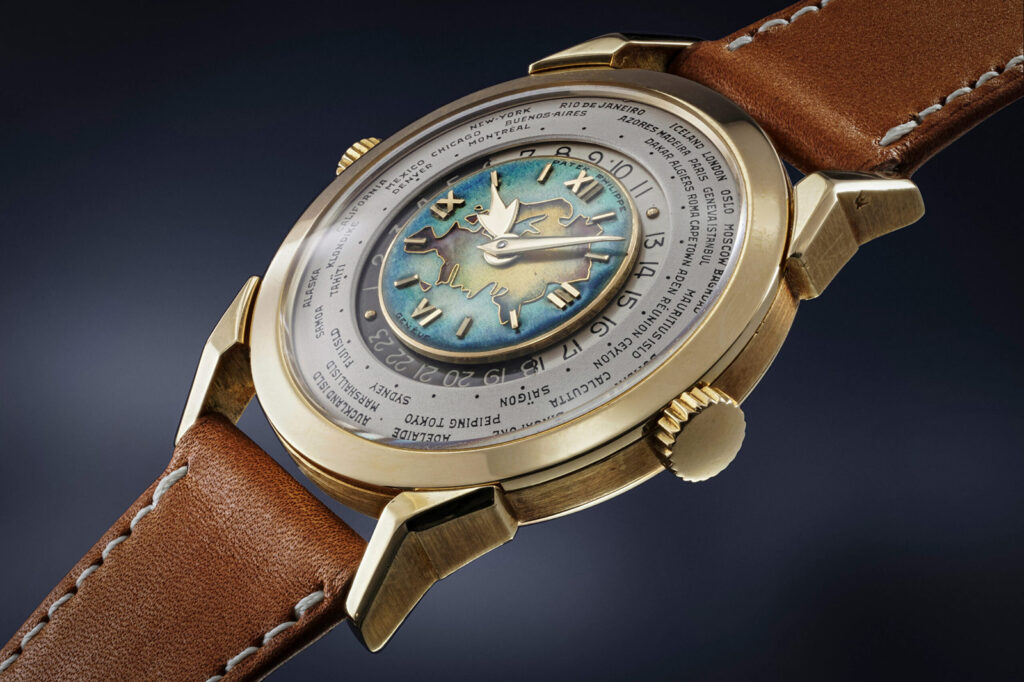
The world of collecting is vast, and tastes vary widely. Some collectors chase mechanical complexity, others value historical importance, while many are drawn to provenance, rarity, or sheer uniqueness. But every now and then, a watch appears that seems to bring all of these elements together. Looking at the world of vintage horology, this is exactly the kind of piece that represents everything a collector could ever hope to find.
The End of War, The Beginning of Unity
In 1945, a world brought to its knees was finally witnessing the end of the Second World War, a defining turning point not only for nations, but for humanity as a whole. As countries began to rebuild from the ground up, there was, despite everything, a sense of relief, unity, and cautious hope for the future.
In Geneva, a group of individuals decided to express their gratitude to those who had helped bring the conflict to an end. Despite Switzerland’s neutrality, the desire to acknowledge the efforts of the Allied leaders was deeply felt. And so, they chose to do what Switzerland does best: create exceptional watches.
The idea was as symbolic as it was ambitious, four timepieces, each made for one of the leaders of the Allied forces: Charles de Gaulle, Harry S. Truman, Joseph Stalin, and Winston Churchill. These watches were meant to celebrate a new era of global unity, while forever remembering the cost of the conflict.
Four Watches, One Message
For such a purpose, the chosen complication could only be something deeply symbolic: world time. The man behind it was Louis Cottier, the genius watchmaker who had already revolutionized horology with his world-time system, notably through collaborations with Patek Philippe. Together with Agassiz, he brought this extraordinary project to life.
The entire operation was kept remarkably secret. Even the case maker, Maison Wenger, and other collaborators were largely unaware of the final purpose of the watches, despite Cottier’s prominence in Geneva’s watchmaking circles. Commissioned in August 1945, the goal was to complete all four pieces by November, just in time to present them as Christmas gifts.
Each watch carried powerful symbolism. The caseback was engraved with a “V” for Victory alongside a depiction of the world, accompanied by the name of its intended recipient. On the front, the classic world-time dial layout was elevated by exquisite enamel work, making each piece not only technically impressive, but artistically unique.
Every dial told a different story:
- For Truman, the Statue of Liberty was depicted, with the hour hand shaped as an olive branch, a clear symbol of peace.
- For Churchill, Saint George slaying the dragon embodied Britain’s resilience, with the hour hand forming a trident.
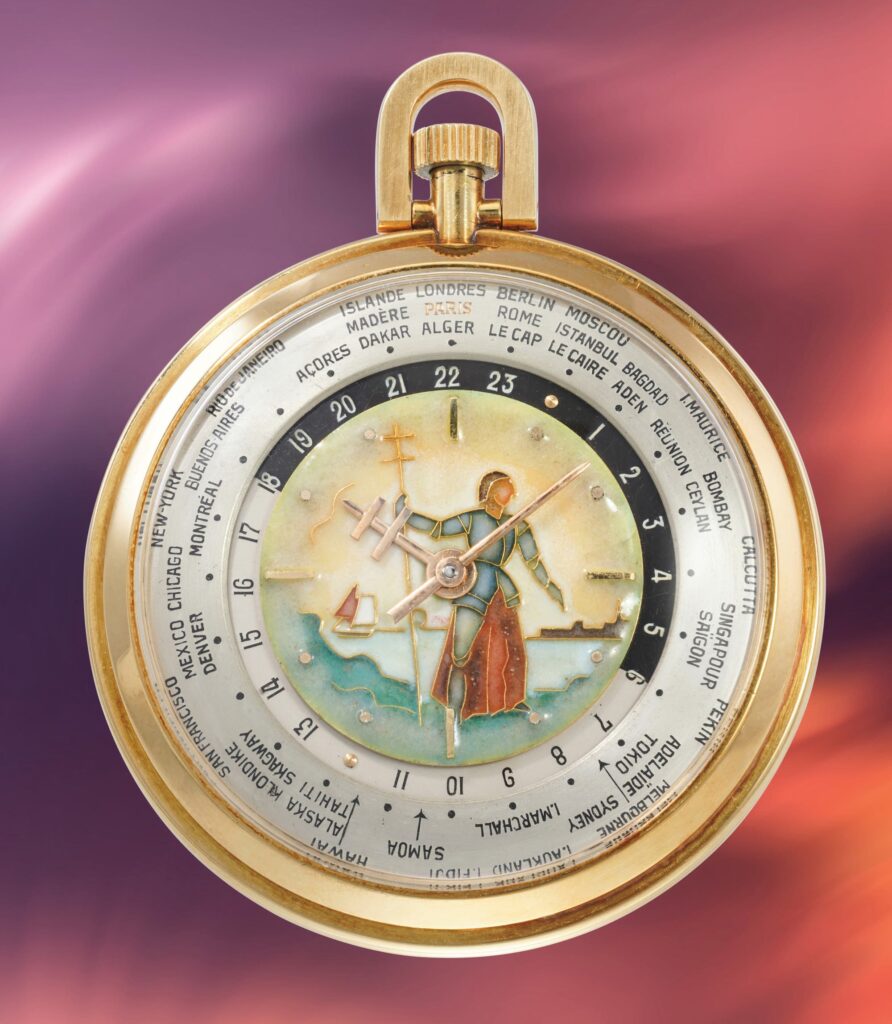
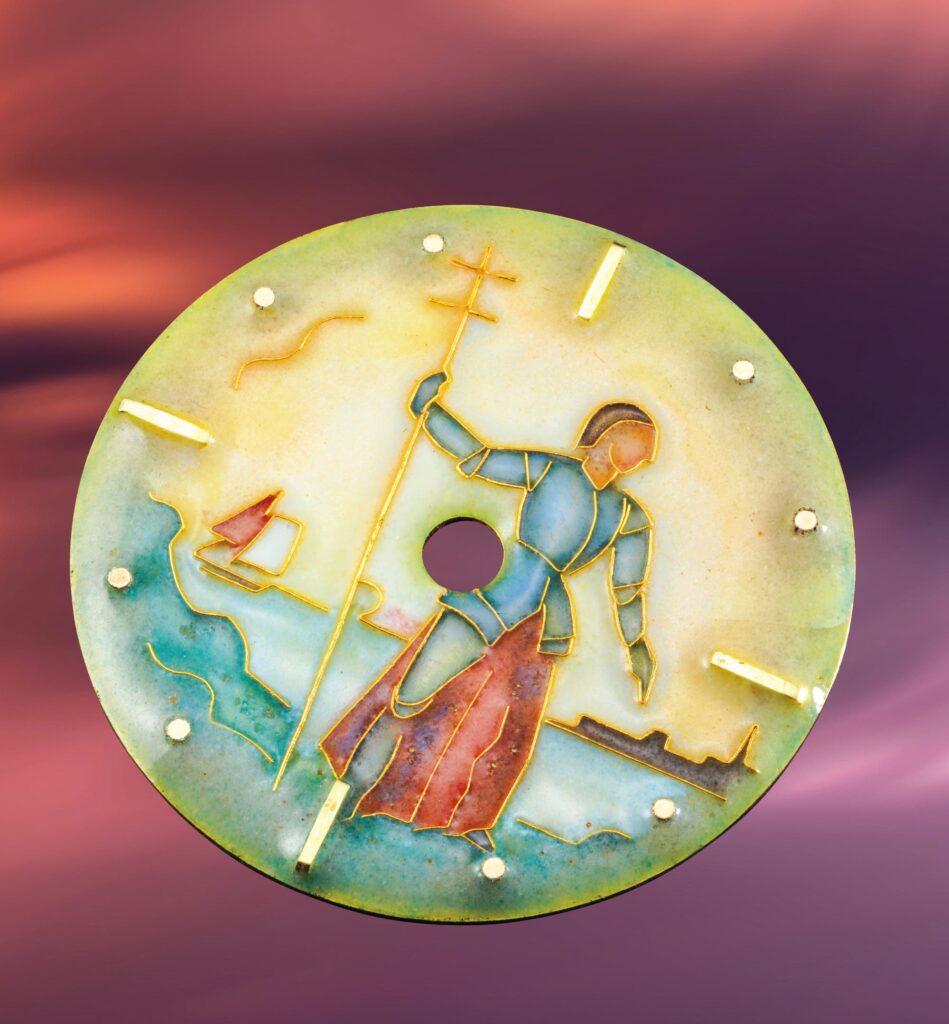
- For de Gaulle, Joan of Arc planting the Cross of Lorraine represented liberation, echoed by the hour hand itself.
- For Stalin, an industrial worker stood before blazing factories, with the hour hand rendered as a five-pointed star, mirroring Soviet symbolism.
The dials were designed by Cottier, produced by Stern Frères and Louis Calame, and enamelled by Michel Deville, while the engravings were executed by Edgar Maier. Every detail was carefully considered, every element loaded with meaning.
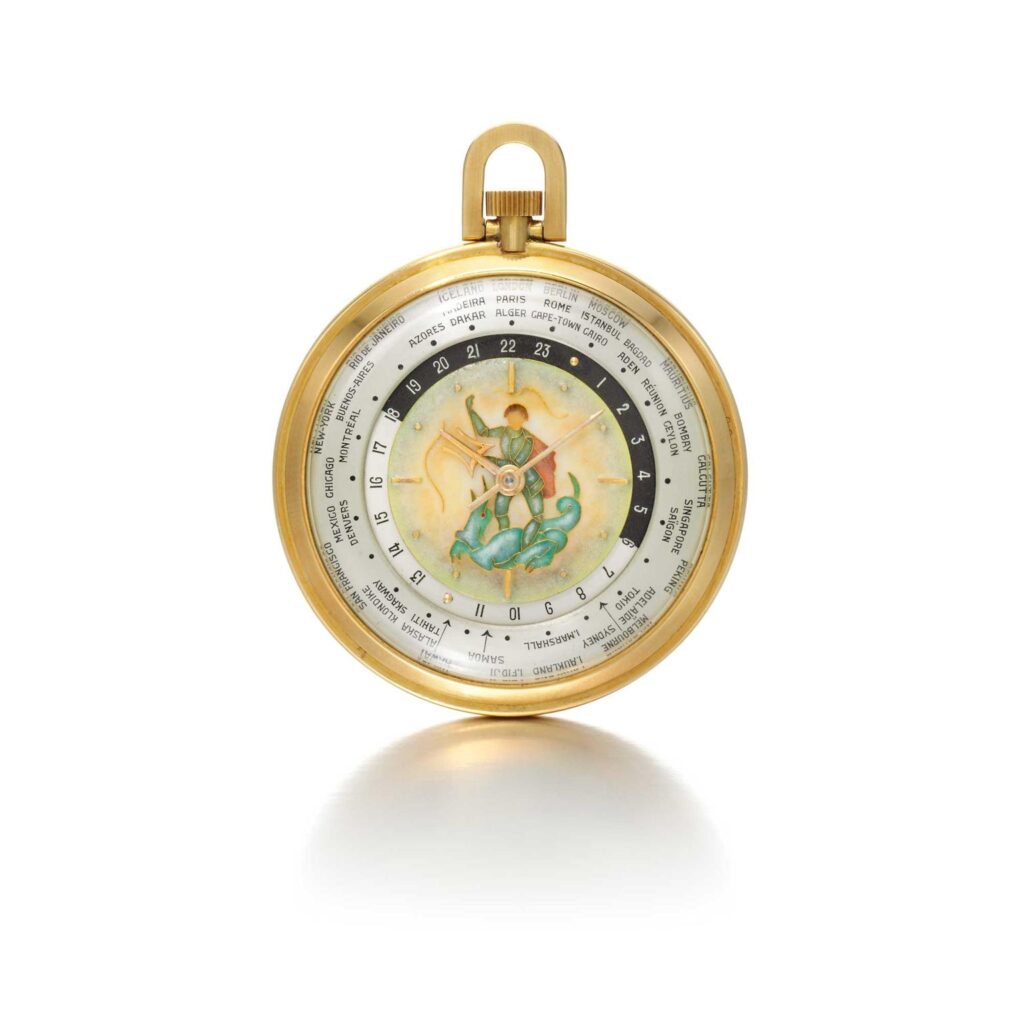
Even the smallest details carried significance: on each dial, the city corresponding to the leader was written in gold, standing out against the black text of the other cities, subtle, yet deeply intentional.
The history of these watches remains partially shrouded in mystery. Despite detailed descriptions, images of the examples made for Truman and Stalin remain virtually impossible to find, adding another layer of intrigue to an already fascinating story.
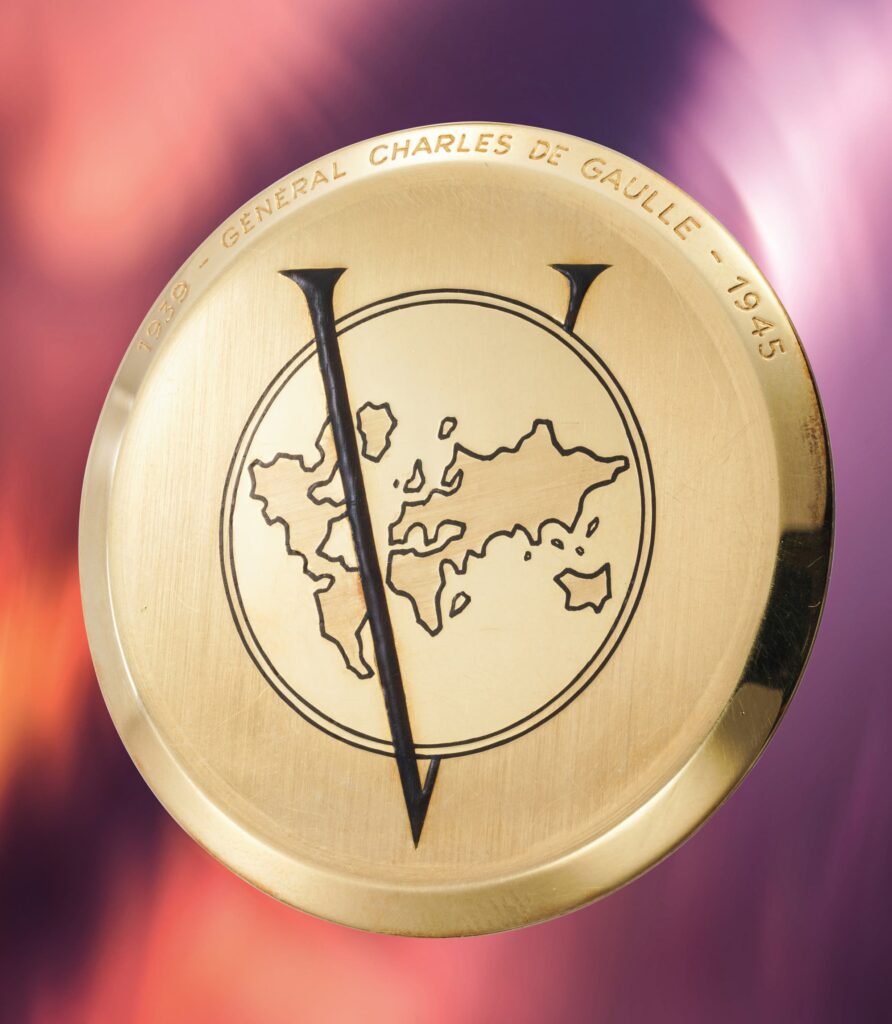
Now, one of these four extraordinary pieces, the watch made for Charles de Gaulle, is set to appear at auction with Phillips in the coming days. It stands as one of the most compelling and historically rich watches to ever surface on the market.
The last time one of these watches was sold was in 2015, when Churchill’s example reached £485,000. Today, it’s hard to imagine the de Gaulle watch achieving anything less than a seven-figure result.
And perhaps that is only fitting.
Because this is not just a watch, it is a witness to history, a symbol of unity, and quite possibly one of the most historically important timepieces ever created.
Follow us on our social media channels to stay up to date with the latest news from the world of watchmaking, and discover what’s new on Watchype.
